Choosing the right sheet of metal thickness is essential for getting the strength, durability, and precision a project requires. However, steel thickness isn’t always listed in inches or millimeters. Many suppliers and fabricators use gauge numbers to identify sheet metal thickness, which can make material selection confusing without a reliable reference.
A steel gauge chart makes it easier to compare measurements, understand gauge differences, and select suitable materials for fabrication. It also helps you identify the correct thickness for different steel types and manufacturing requirements. Here’s how the system works, how to convert measurements, and what to consider when choosing steel for cutting and other manufacturing processes.
How Does Sheet Metal Gauge Work?
Sheet metal gauge is a numbering system used to identify the thickness of metal sheets. Unlike measurements in inches or millimeters, gauge numbers follow a reverse scale: the higher the gauge number, the thinner the sheet.
For example, 14-gauge steel is thicker than 16-gauge steel, while 18-gauge steel is thicker than 20-gauge steel.
Gauge measurements also vary depending on the material. Steel, stainless steel, and galvanized steel can have different thicknesses at the same gauge number. This is why a sheet metal gauge chart should always identify the material being measured. Understanding these differences helps fabricators choose the right material for their projects and avoid mistakes when ordering or preparing sheets for cutting.
Sheet Metal Gauge Chart for Steel in Inches and Millimeters
The following steel sheet thickness chart provides nominal thickness measurements for common steel gauges. It includes mild steel, stainless steel, and galvanized steel, allowing you to compare their measurements in both inches and millimeters.
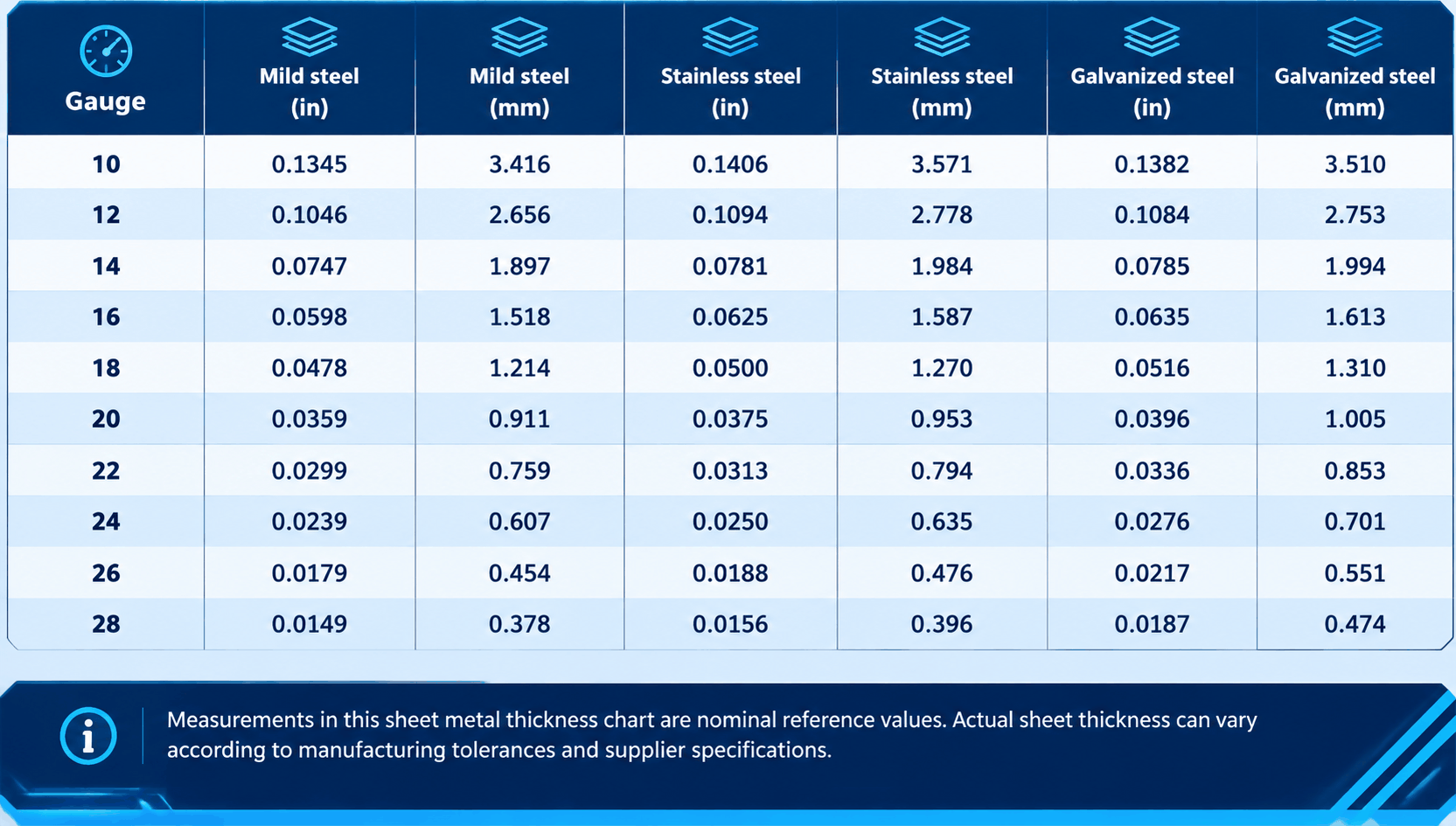
The steel sheet metal gauge chart in mm shows an important distinction: the same gauge number does not always represent the same physical thickness. For example, 18-gauge mild steel measures approximately 1.21 mm, while 18-gauge stainless steel measures 1.27 mm. Galvanized steel at the same gauge measures approximately 1.31 mm.
Standard Sheet Metal Thickness in Millimeters
The material and the gauge system both change sheet metal gauge thickness. Mild steel generally follows the Manufacturers’ Standard Gauge (MSG), while stainless steel and galvanized steel have their own published thickness references.
Here are some commonly used measurements:
- 12-gauge steel: Approximately 2.66 mm or 0.1046 inches.
- 14-gauge steel: Approximately 1.90 mm or 0.0747 inches.
- 16-gauge steel: Approximately 1.52 mm or 0.0598 inches.
- 18-gauge steel: Approximately 1.21 mm or 0.0478 inches.
- 20-gauge steel: Approximately 0.91 mm or 0.0359 inches.
These measurements provide a useful starting point when comparing materials. However, always check the applicable material specification before ordering sheets for a project.
How to Read a Steel Sheet Metal Gauge Chart
Reading a steel gauge thickness chart becomes easier once you understand how its columns work. Find the gauge number in the first column, identify the correct material, and read its corresponding thickness in inches or millimeters. If you’re working with technical drawings that use metric measurements, you may need to convert sheet metal gauge to mm. The basic conversion between inches and millimeters is:
1 inch = 25.4 mm
To convert thickness in inches to millimeters, multiply it by 25.4. For example, 14-gauge mild steel measures 0.0747 inches.
0.0747 x 25.4 ≈ 1.90 mm
For the reverse conversion, divide the millimeter measurement by 25.4 to obtain inches.
Sheet Metal Gauge Conversion Chart
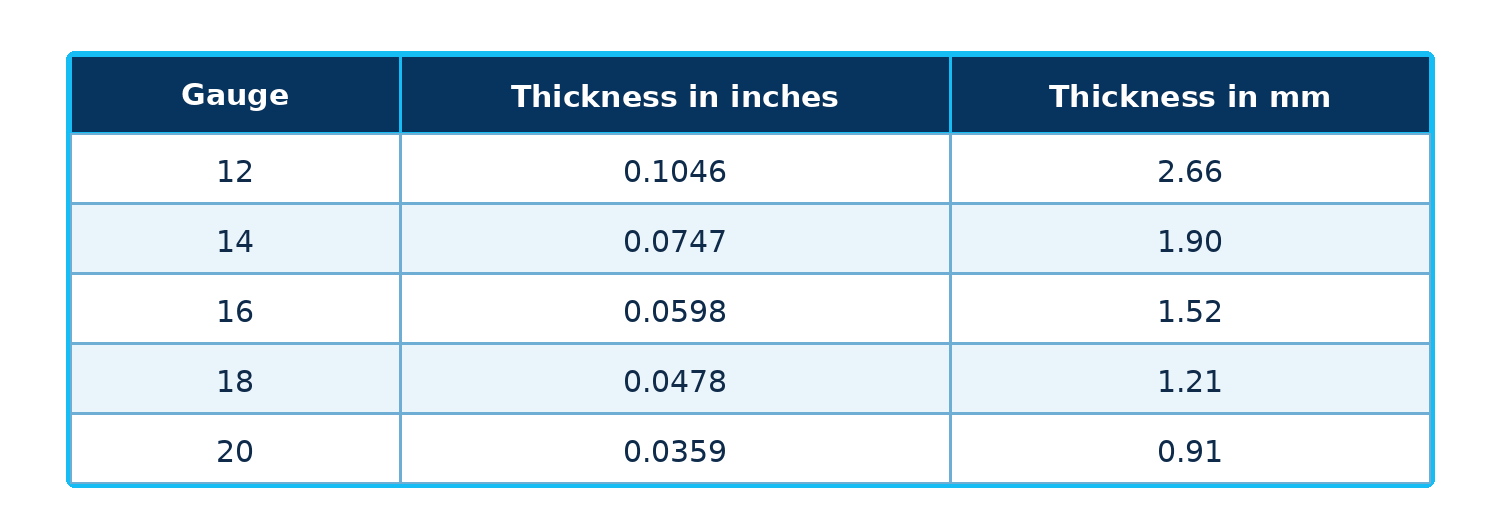
For reference, 14 gauge to mm sheet metal is approximately 1.90 mm, while 12 gauge to mm sheet metal is approximately 2.66 mm. Similarly, 18 gauge to mm sheet metal measures approximately 1.21 mm. These conversions are based on mild steel. If you’re working with stainless or galvanized steel, use the corresponding material column rather than applying the same figures.
How Do Different Steel Types Affect Gauge Measurements?
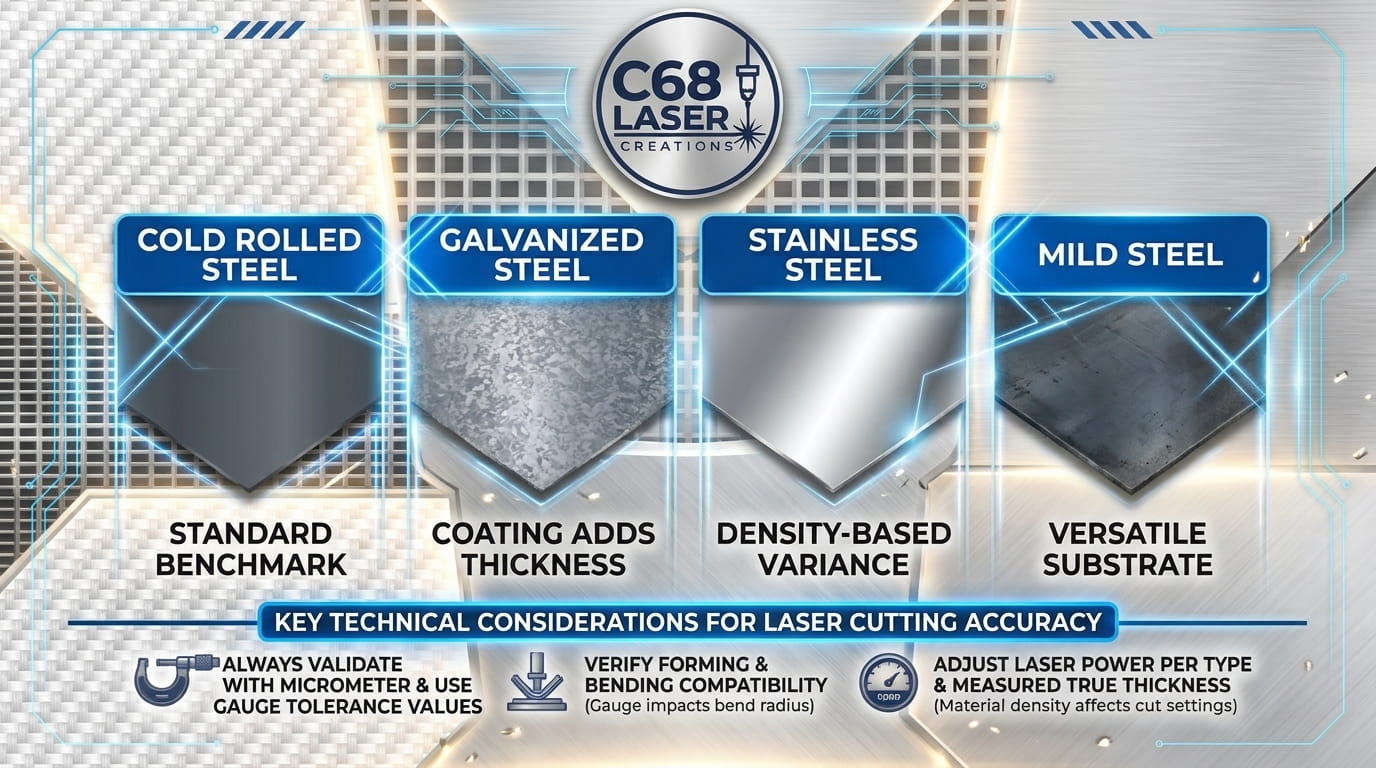
Not all steel sheets follow identical thickness specifications. The type of steel and its manufacturing process can influence the measurements associated with a particular gauge.
1. Cold Rolled Steel
Cold rolled steel is processed at or near room temperature to achieve a smoother surface and tighter dimensional control. A sheet metal gauge chart for cold rolled steel generally uses the standard mild steel thickness values shown earlier.
2. Galvanized Steel
A sheet metal gauge chart for galvanized steel helps account for thickness differences caused by its protective zinc coating. Galvanized steel resists corrosion, making it suitable for applications where moisture exposure is a concern. For instance, 16-gauge galvanized steel measures approximately 1.61 mm, compared with 1.52 mm for mild steel.
3. Stainless Steel
Stainless steel contains chromium, which provides corrosion resistance and makes it suitable for applications requiring durability and easier maintenance. Its gauge measurements differ slightly from those of mild steel. An 18-gauge stainless steel sheet measures approximately 1.27 mm, while 18-gauge mild steel measures approximately 1.21 mm.
4. Mild Steel
Mild steel is widely used in fabrication because it offers a practical combination of strength, formability, and cost. A mild steel sheet metal gauge chart is useful when selecting materials for brackets, enclosures, panels, and other fabricated components. Choosing between these materials requires considering more than thickness. Corrosion exposure, mechanical requirements, surface finish, and fabrication methods also influence material selection.
How Does Steel Gauge Affect Laser Cutting?
Material thickness influences how a sheet behaves during cutting, bending, welding, and forming. Selecting the right gauge helps fabricators achieve the required dimensions while maintaining the strength and functionality of the finished component.
Choosing the Right Gauge for Fabrication
The best steel gauge depends on the intended application, structural requirements, and manufacturing process. Here are some common starting points:
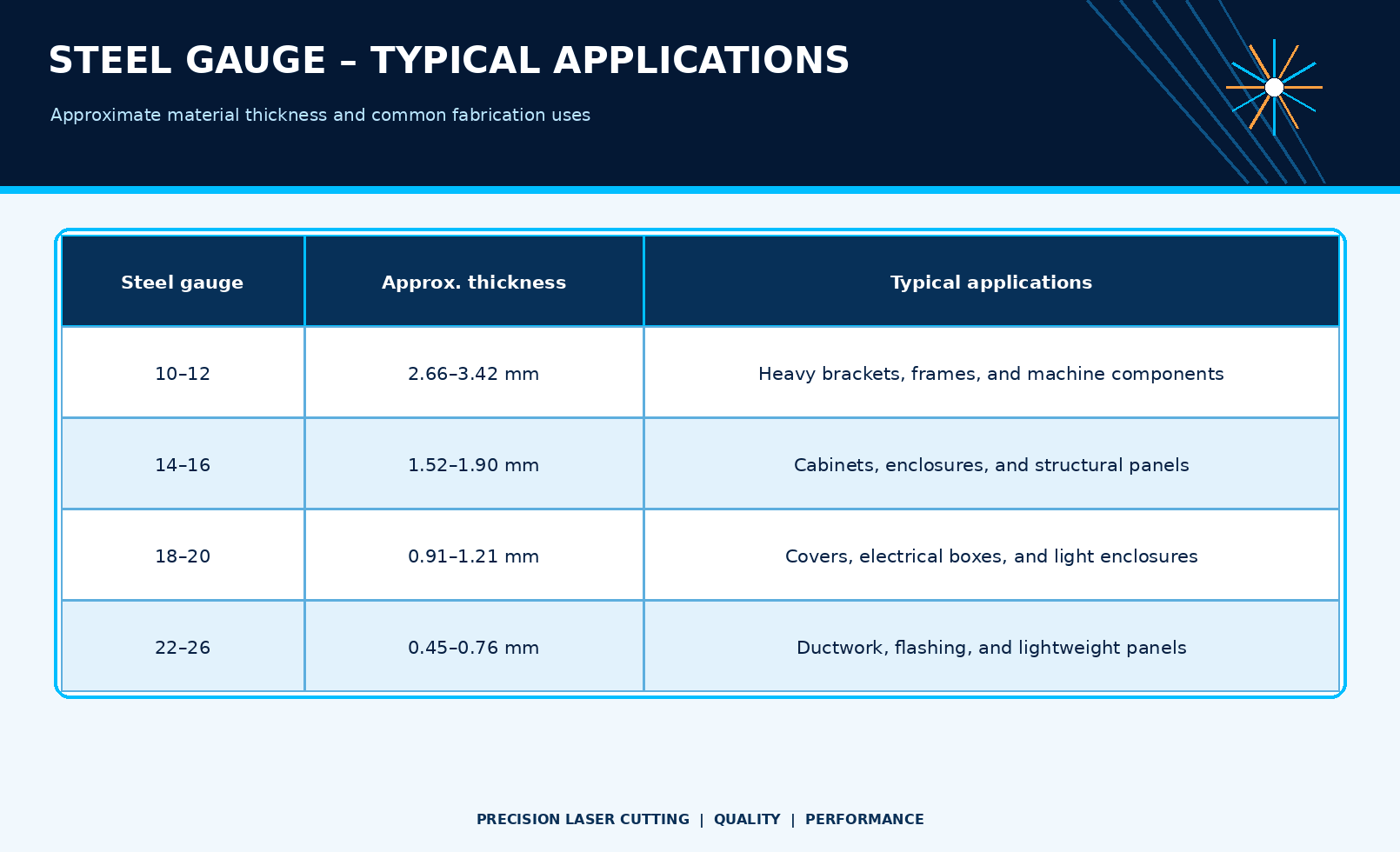
These are general examples rather than fixed application requirements. The appropriate thickness depends on the loads, dimensions, material grade, and design.
Precision Cutting for Sheet Metal
Steel thickness also affects laser cutting performance. Thicker sheets generally require more cutting power and may need slower processing speeds. Material composition, laser settings, assist gas, and equipment capabilities also influence the final cut.
When preparing sheets for laser cutting, fabricators should consider:
- Material thickness: Confirm that the selected sheet falls within the machine’s cutting capabilities.
- Cutting precision: Match machine settings to the material and thickness to maintain clean edges and accurate dimensions.
- Material selection: Choose a suitable steel grade based on the component’s strength and environmental requirements.
- Design specifications: Account for tolerances, kerf width, and other factors that influence the finished part.
Working with experienced fabricators offering laser cutting services in Ohio can help ensure material selection and cutting specifications align with project requirements.
Sheet Metal Safety Practices
Handling and processing sheet metal requires appropriate precautions, particularly when working with sharp edges, heavy sheets, and industrial cutting equipment.
Some essential sheet metal safety practices include:
- Wear appropriate protective gloves, safety glasses, and footwear when handling materials.
- Use suitable lifting equipment when moving heavy sheets.
- Keep work surfaces clear of scrap metal and sharp offcuts.
- Follow machine operating procedures and use required protective guards.
- Ensure adequate ventilation and follow equipment-specific safety requirements.
Proper handling and equipment maintenance help reduce workplace hazards throughout the fabrication process.
Choose the Right Steel Gauge for Accurate Fabrication
Understanding steel gauge measurements makes material selection easier and helps prevent errors during fabrication. Whether you’re comparing 12-gauge and 18-gauge sheets or converting measurements into inches and millimeters, always consider the material type and its actual thickness.
A reliable gauge reference, accurate technical drawings, and appropriate cutting specifications help produce components that meet their intended requirements. C68 Laser Creations provides precision laser cutting solutions for projects requiring intricate designs, accurate dimensions, and consistent results.