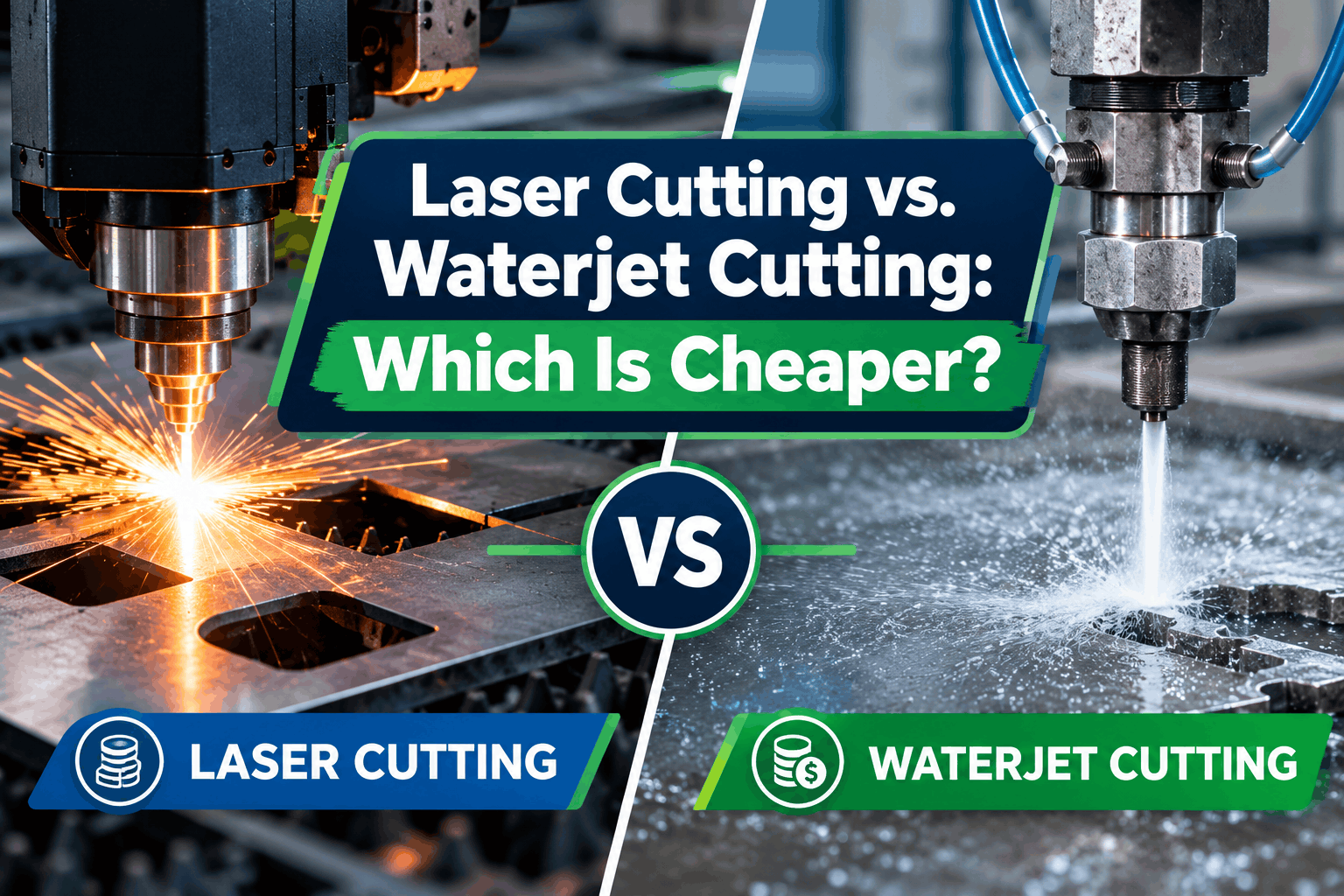
Choosing between laser cutting and waterjet cutting can affect your manufacturing budget, production timeline, and finished product quality. Both methods offer precision cutting for different materials and applications, but they use different technologies that influence their operating costs.
So, is laser cutting cheaper than waterjet cutting?
In many cases, laser cutting costs less for thin metal sheets and high-volume production. Waterjet cutting can be the better investment for thick materials, heat-sensitive components, and projects that require cutting without thermal damage. Understanding the differences between these processes helps you select the right cutting method as well as the right laser cutting company.
How Does Laser Cutting Work?
Laser cutting uses a concentrated beam of light to cut, melt, or vaporize material along a programmed path. Computer-controlled equipment directs the beam to create precise shapes, intricate designs, and consistent edges.
Fiber laser cutting is particularly common in metal fabrication. It works well with materials such as stainless steel, aluminum, and carbon steel, especially when processing thin and medium-thickness sheets.
Laser cutting supports a wide range of applications beyond industrial metalwork. Businesses use it to create laser-cut metal signs, custom awards, and customized laser-cut keychains for branding and promotional purposes. Other applications include laser-cut wood signs, laser-cut acrylic signs, and laser-cut boards for decorative or practical use. With the right equipment and settings, laser cutting can also handle laser cutting plywood and other suitable wood materials.
The main advantages of laser cutting include:
- Fast processing: Laser cutters can move quickly through suitable materials, especially thin metal sheets.
- Precision: A focused beam produces detailed cuts and intricate shapes.
- Automation: Computer-controlled cutting supports repeatable results across large production runs.
- Material efficiency: Optimized cutting layouts can reduce waste and make better use of sheet material.
How Does Waterjet Cutting Work?
Waterjet cutting uses a high-pressure stream of water to cut through materials. For many industrial applications, the system mixes the water with an abrasive, such as garnet, to cut harder materials, including metals. Laser cutting, on the other hand, is often used to create detailed designs and laser-cut metal signs with clean edges and precise shapes.
Unlike laser cutting, waterjet cutting does not rely on a concentrated heat source. This makes it useful for components that could warp, harden, or experience other unwanted changes when exposed to high temperatures.
Waterjet cutting can process thick metal plates and a broad range of other materials, including stone, glass, composites, and certain plastics. Laser cutting, meanwhile, is well suited to producing customized laser-cut metal wallets with logos, custom aluminum laser-cut cards for businesses, and precision laser-cut dog tags.
For larger orders, a laser cutting service for bulk items can help businesses produce consistent designs across multiple pieces.
Its main advantages include:
- No thermal cutting zone: The process avoids heat-related changes associated with laser cutting.
- Broad material compatibility: Waterjets can cut many conductive and nonconductive materials.
- Thick-material capability: Abrasive waterjets can handle substantial material thicknesses.
- Complex shapes: Computer-controlled systems can produce detailed profiles and intricate designs.
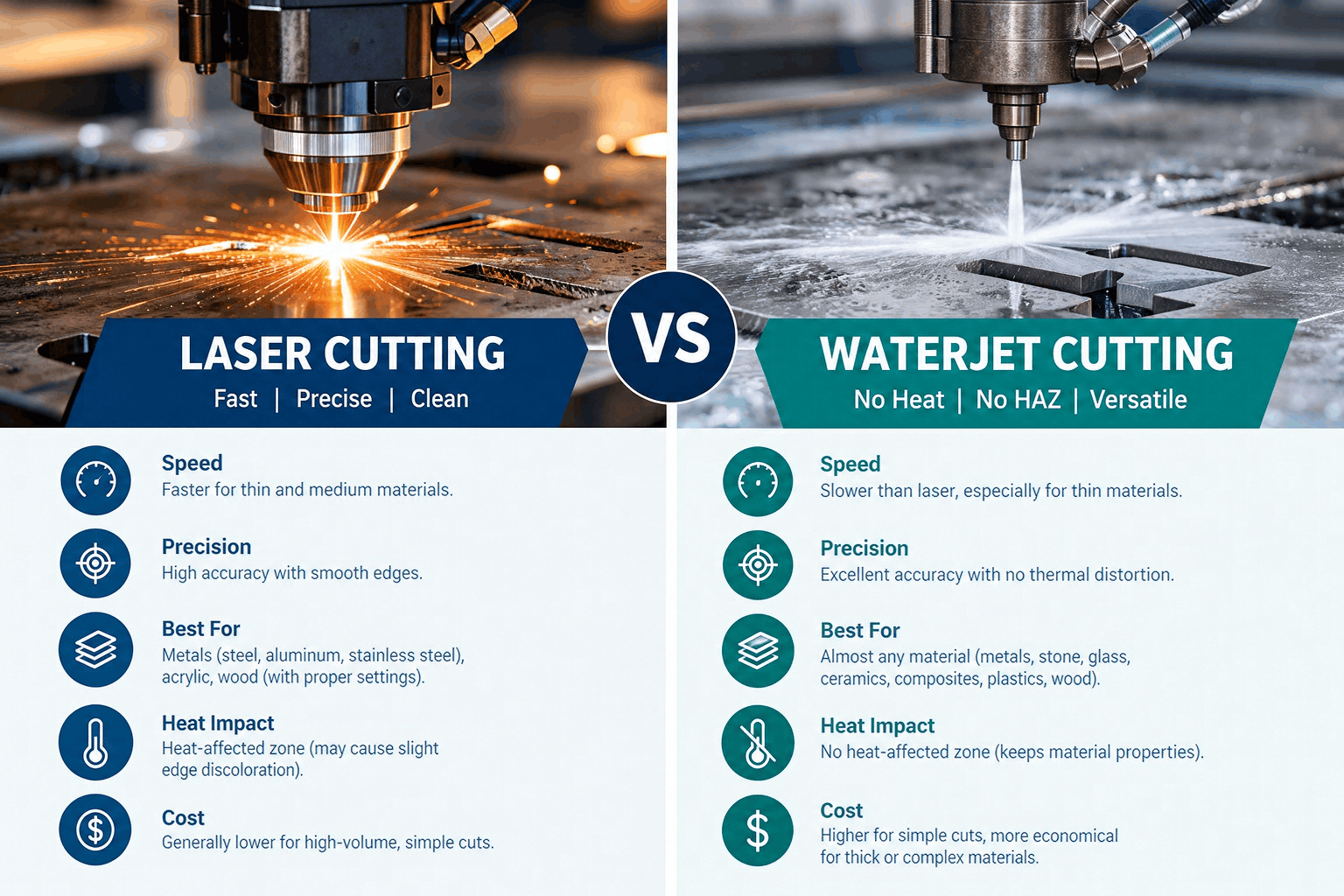
Laser Cutting vs. Waterjet Cutting: Cost Comparison
The cost difference between laser cutting and waterjet cutting depends on several factors, including material type, thickness, design complexity, machine capacity, and production volume. Neither method is automatically cheaper for every project.
Equipment and Operating Costs
Laser cutting machines can involve substantial upfront investment, particularly industrial fiber laser systems. Their operating costs include electricity, assist gases, consumables, maintenance, and replacement parts.
Waterjet systems also require significant investment. High-pressure pumps, cutting heads, abrasive materials, water management, and routine maintenance contribute to operating expenses.
A waterjet’s abrasive and maintenance requirements can make it more expensive to operate for certain jobs. However, the total cost depends on the equipment and application, so comparing machine expenses alone will not identify the cheapest option.
Laser Cutting Cost per Hour vs. Waterjet Cutting Cost per Hour
Laser cutting cost per hour depends on machine power, energy consumption, gas usage, operator time, maintenance, and cutting speed. Waterjet cutting cost per hour depends on pump power, abrasive consumption, nozzle wear, water usage, maintenance, and labor.
Laser cutting can have a cost advantage when a machine processes thin sheets rapidly. Waterjet cutting may require longer processing times for comparable jobs, particularly when cutting thick materials.
However, hourly machine rates do not tell the whole story. A faster machine can complete a job sooner, while a slower process might eliminate the need for secondary finishing or heat-related corrections. For an accurate estimate, compare the total quoted waterjet vs. laser price for the same part, material, thickness, quantity, and finishing requirements.
Laser Cutting Cost per Meter
Laser cutting cost per meter measures the expense of cutting a specified length of material. The rate varies with material thickness, cutting speed, machine settings, and the number of starts, corners, and intricate details in the design. Straight cuts through thin metal generally require less processing time than complex profiles with numerous small features. Material setup and handling can also influence the final cost.
Waterjet cutting can be evaluated using similar job-based measurements, but its cutting speed varies significantly with material thickness and hardness. For this reason, a per-meter comparison is meaningful only when both methods process equivalent materials and specifications.
Material Thickness and Waste
Material thickness is one of the most important factors in the waterjet vs. laser price comparison. Laser cutting is often economical for thin sheet metal because it combines high cutting speeds with narrow cuts. Waterjet cutting becomes more competitive when a job involves thick material, heat-sensitive components, or materials that are unsuitable for a particular laser system.
Both processes can minimize waste through efficient nesting, which arranges parts to make better use of raw material. The final result depends on part geometry, spacing requirements, material size, and cutting tolerances.
Production Volume and Finishing
Large production runs can favor laser cutting when its speed and automation reduce the cost per part. Waterjet cutting can make financial sense for specialized components, lower-volume jobs, or applications where avoiding heat damage is essential.
Finishing requirements also matter. Laser-cut parts may need deburring or additional work depending on the material and cutting settings. Waterjet-cut edges may also require finishing when a particular surface quality or tolerance is necessary. The cheapest process is the one that meets the specifications with the lowest overall production cost, not necessarily the lowest hourly rate.
Which Materials Work Best With Each Cutting Method?
Material compatibility is another major consideration when choosing between laser and waterjet cutting.
| Material or application | Laser cutting | Waterjet cutting |
| Thin sheet metal | Often highly economical | Suitable, depending on requirements |
| Thick metal plate | Depends on laser power and material | Often a strong option |
| Stainless steel | Common application | Suitable |
| Aluminum | Suitable with compatible equipment | Suitable |
| Acrylic | Suitable with the right laser | Suitable with appropriate settings |
| Glass and stone | Limited or specialized applications | Often suitable |
| Heat-sensitive components | Requires thermal considerations | Often preferable |
| Intricate metal designs | Excellent for suitable materials | Excellent, depending on thickness and detail |
The table provides general guidance rather than a guarantee of performance. Equipment specifications, material grade, thickness, tolerances, and finish requirements can change which method works best.
Waterjet and Laser Cutting Precision and Speed
Laser cutting and waterjet cutting can both deliver accurate results, but their performance differs by application. Laser cutting generally offers excellent precision for thin metal sheets and detailed profiles. Its narrow kerf, or width of material removed during cutting, supports intricate designs and efficient material use. It can also deliver high production speeds when processing suitable materials.
Waterjet cutting provides precision without introducing a thermal cutting zone. This is especially valuable when heat could affect a component’s properties or dimensions. Its performance depends on factors such as material thickness, cutting speed, abrasive flow, and the required edge quality.
Conclusion: Choosing the Right Cutting Service
The decision between types of laser cutters comes down to your material, design, production volume, and budget. Laser cutting often provides a cost-effective solution for thin metal sheets, detailed designs, and high-volume work.
Waterjet cutting can offer better value for thick materials, heat-sensitive components, and projects that require a cold-cutting process. For businesses and individuals seeking laser cutting services in Ohio, C68 Laser Creations in Talmadge, Ohio, is an option to consider for laser-cut projects.
Contact the company to discuss your design, material, quantity, and finishing requirements and determine the right approach for your needs. You can also explore its laser cutting capabilities before requesting a quote. Comparing specifications and total project costs will help you choose a cutting method that delivers the quality you need without unnecessary expense.